20th October 2026
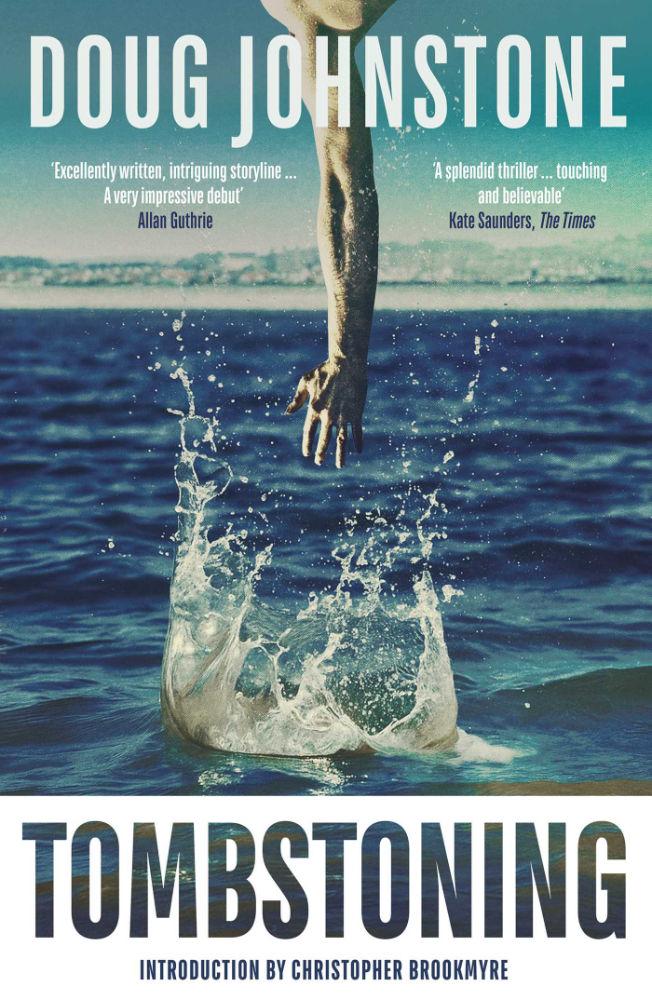
Doug Johnstone is celebrating a landmark twentieth year as a published writer with his twentieth novel, Ghost Notes, which is the seventh in his acclaimed and award-winning Skelfs crime fiction series. His first two novels – Tombstoning (2006) and The Ossians (2008) – have also been reissued this year, with new introductions by Chris Brookmyre and Val McDermid. Doug will be discussing all of this and much more as he looks back over two decades of murder and mayhem. He’ll also be playing some live music, so a joyous hour is guaranteed!
Biography
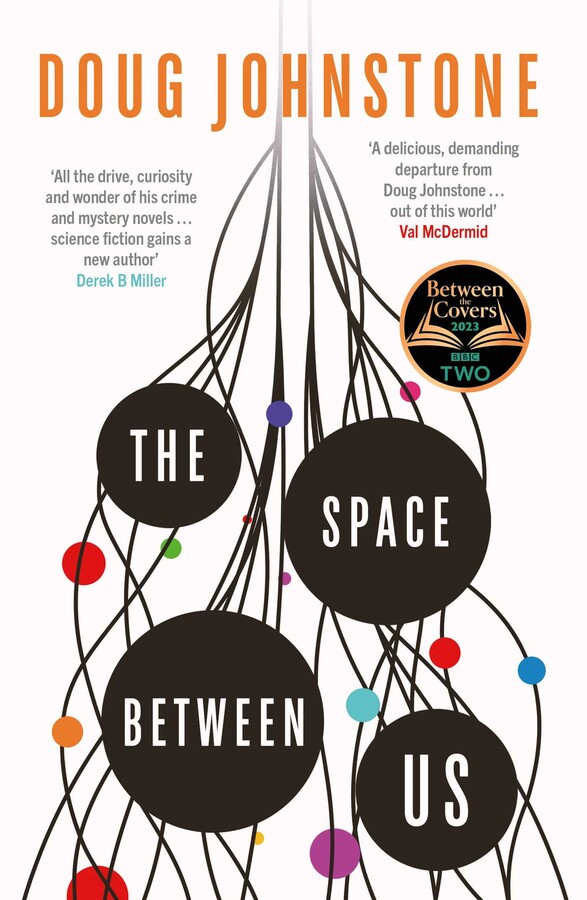
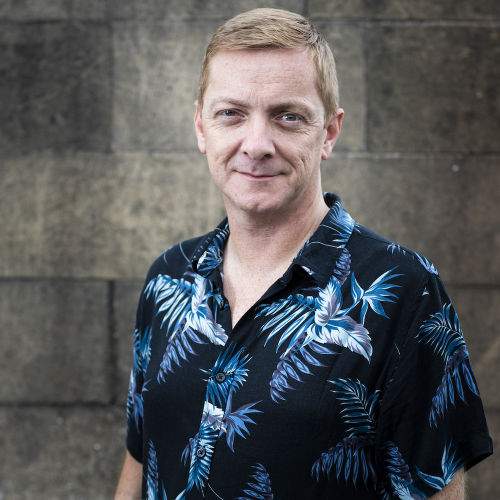
Doug Johnstone is the author of twenty novels, many of which have been bestsellers. The Space Between Us was chosen for BBC Two’s Between the Covers, while six of his books have been shortlisted or longlisted for the Theakston Crime Novel of the Year or the McIlvanney Prize for Scottish Crime Novel of the Year. Doug has taught creative writing or been Writer in Residence at universities, schools, writing retreats, festivals, prisons and funeral directors. Doug has been an arts journalist for over twenty years; is a songwriter / musician with ten albums released; and is the drummer for the Fun Lovin’ Crime Writers. He is co-founder and player/manager of the Scotland Writers Football Club and lives in Edinburgh.
Doug was Writer in Residence at the University of Strathclyde in 2010–12 and before that a lecturer in creative writing at the same university. He’s had short stories published in various anthologies, newspapers and literary publications, including the Edinburgh Review and Gutter. In 2013 Doug was a judge for the Scottish Book Trust’s new writers’ awards. Before becoming a writer, Doug studied physics at the University of Edinburgh and completed a PhD in nuclear physics. He also spent four years as a systems engineer, mathematically modelling airborne radars and missile-guidance systems.
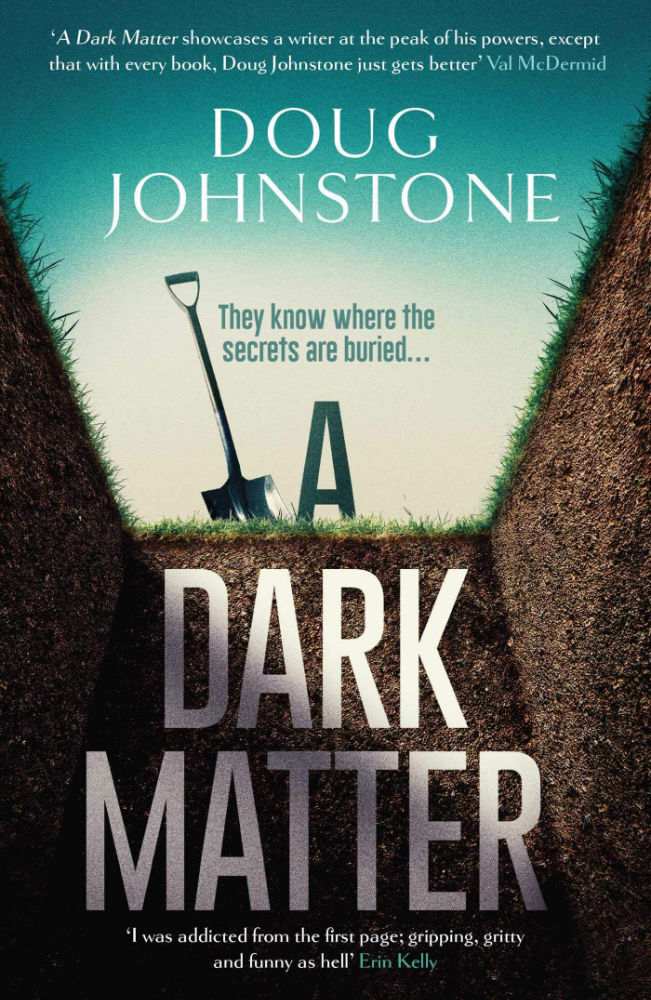
Doug’s hugely successful Skelfs series follows three generations of women from the Skelfs family as they take over the family funeral home and private investigation businesses. A Dark Matter (2019) introduced a cast of unforgettable Edinburgh characters, marking the start of an addictive new series – compelling, tense and shocking with a darkly funny and warm portrait of a family in turmoil. Ghost Notes (2026) promises to be another masterful instalment in Doug’s award-winning, addictive Skelfs series.
In addition to the Skelf series and a number of stand-alone novels, Doug has written the bestselling Enceladons Trilogy. When three people suffer strokes after seeing dazzling lights over Edinburgh, then awake completely recovered, they’re convinced their ordeal is connected to the alien creature discovered on a nearby beach. The Space Between Us (2023) is an adrenaline-soaked, deeply humane, life-affirming first-contact novel; The Collapsing Wave (2024) the awe-inspiring, exquisitely moving sequel; and The Transcendent Tide (2025) is the epic finale to this spectacular trilogy.
October Talk – Doug Johnstone: Twenty Years as a Published Author – two decades of murder and mayhem!
Vice Chair of The Stewartry Literary Society Karen Thewlis, opened with a few words regarding recently deceased TSLS member and former Treasurer, William Oates. Karen then introduced Doug Johnstone to the packed audience and described his multi-faceted life: first as a nuclear physicist, then collectively as a writer-musician-footballer, with 20 books to his name.
Doug opened his talk describing how his books tend to be in and around the edges of the crime fiction genre; his sci-fi is not mainstream either. This poses a problem for bookshops as they don’t know where to place his books. The audience heard that his first published novel Tombstoning (2006) has just been re-issued. Set in his home town of Arbroath, Doug stated that when the headmaster of his former high school invited him back for a prize giving day, he knew that this master could not have read the book: when first published, the Arbroath Herald had accused Doug of hating Arbroath (which he did!) Doug spoke of the importance of literature at school. He did not really come across any that ‘spoke to him’ until he encountered Iain Banks’ The Wasp Factory (1984). In this book Doug recognised the way the folk interacted with each other; their small town behaviour.
The audience heard that whilst studying physics at University and completing his PhD, Doug was playing the drums and a guitar in bands, writing occasional short stories in isolation. The book which had a huge impact on him around this time was Trainspotting (1993) by Irvine Welsh. He recognised the culture and sub-culture; it was an eye-opener regarding what could be written about. Doug got a well-paid job as a Systems Analyst but was also writing about bands, printing the reviews and distributing them to pubs and clubs. In October 1999 he decided to quit his job and go freelance. That was the last time he received a wage. He enjoyed the discipline of journalism and of writing for a living. He also liked the editing process. He wrote his first novel The Ossians (2008) and sent it off to 30+ publishers and more than 50 editors. This story was not destined to be his first published book as, in Doug’s words, “they all rejected it on the unfair grounds that it was rubbish!” Discussing the editorial process, Doug described the state in which the manuscript for Tombstoning came back from his editor Judy Moir: it smelt of cigarette smoke, was covered in cat paw prints, and had red wine stains. It was also heavily edited in red ink – the sign of rigorous editing. He re-wrote The Ossians on the back of good reviews for Tombstoning.
The audience heard how Doug prefers to write stories that interest him, rather than for a specific genre or placement in a bookshop; he didn’t realise he was writing crime fiction. The re-issues of those first two books have introductions by Chris Brookmyer and Van McDermid respectively. He didn’t know either of them at the time, and now he plays in a band with them!
Doug talked about the impact when his publisher Penguin sacked his editor, ‘dumping’ all her writers in the process. He discussed some standalone novels, Smokeheads (2011) (described as Whisky Galore meets Deliverance), Fault Lines (2018) and Breakers (2019) which are set in very specific parts of Edinburgh. Doug said that “everybody’s version of Edinburgh is different” but his publisher Faber did not want a ‘volcano book’, so he sought out an independent publisher. Breakers was written in response to his house being burgled whilst the family were out celebrating his son’s birthday. Access was gained through a small fanlight window, indicating that one of those responsible was a child. Doug wondered what it must be like to be that kid.
In 2016, Doug was Writer-in-Residence for William Purves Funeral Directors. His role entailed working directly with the staff and organisation to help capture, document, and write their stories. The residency resulted in a short book titled Living with Death, published in June 2017, and left Doug with a huge amount of respect for people working in that industry. It was emotionally challenging dealing with the bereaved.
Doug then embarked on what was to become his hugely successful Skelf series. The first book A Dark Matter was published in 2019; the seventh book Ghost Notes was released in August this year. He stated that these are much more complicated books than he had written previously, balancing the black humour of the funeral industry. To explain the book’s title, Doug said that in drumming, ‘Ghost Notes’ are the opposite of an accent, an echo of a beat that lifts it all; the key to the whole thing. Ghost Notes tackles the use of Artificial Intelligence (AI) to scrape online profiles of deceased, cloning their voices and creating an avatar to interact with. There is a growing market in ‘grief tech’, using AI to create versions of people to chat to after they are dead. But what happens in the future, if access to the ‘grief bot’ is monetised by subscription to provide levels of connection? Doug explained that his Skelf books contain nods to his former life as a physicist through his character Hannah, and to his drumming through her grandmother Dorothy.
After sustained applause, questions were invited. He was asked whether it was difficult writing as 3 women: he doesn’t worry about it. He knows that elements of his own personality are recognisable in his characters. Are they aging in real time? Yes, and he is slightly regretting that! How much has he utilised his scientific knowledge? Little bits of nuclear physics flow through his books: Neutrinos are referred to as the Ghost Particles. He has also written a sci-fi trilogy (The Enceladons Trilogy) which draws on astro biology. How does he explain his evolution from a scientist to a writer? He doesn’t subscribe to there being either ‘science’ or ‘artistic’ brains. Elements of science can be inspirational and very creative. Writing the character of Dorothy Skelf has been instructive.
Doug had brought his guitar with him, and he treated the audience to a couple of his songs. There followed a vote of thanks given by Karen Thewlis. Copies of a number of Doug’s books were available for purchase afterwards, which he kindly signed.